The Truth About Restaurant Calories: Why Guessing is Ruining Your Progress
How hidden oils, larger portions, and poor estimations in restaurants can secretly add 500+ calories to your daily intake.

Ajay Rathore
February 5, 2026 • 6 min read
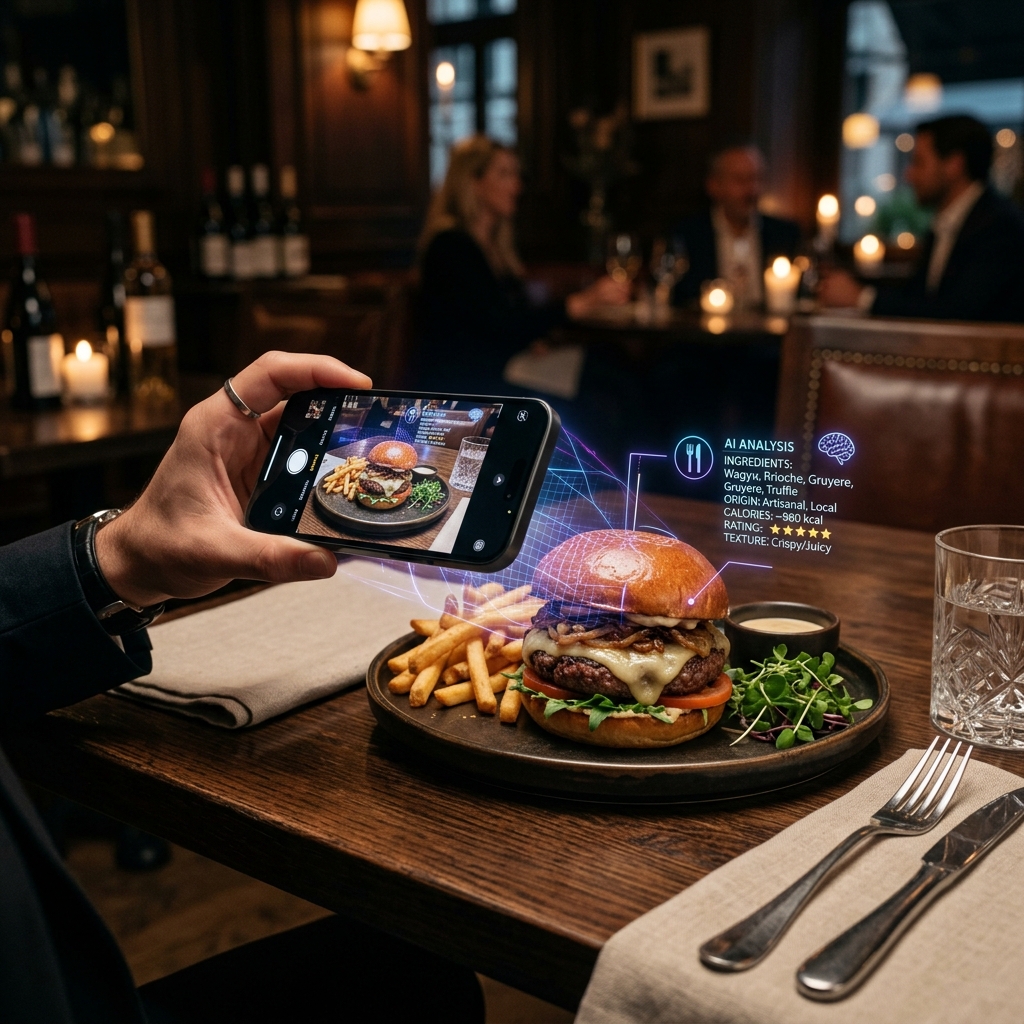
The single greatest threat to your nutritional goals isn't the holiday feast or the weekend cheat meal. It is the silent, unseen margin of error in restaurant kitchens.
You dine out at a local bistro, order a grilled chicken breast with roasted broccoli, and confidently search for a generic "chicken and broccoli" entry in your fitness app. You log 450 calories and carry on with your day, believing you are perfectly within your target.
In reality, you likely consumed closer to 850 calories. The culprit? Hidden preparation fats and extreme portion variance.
The JAMA Findings: Stated vs. Actual Caloric Density
This discrepancy isn't just an educated guess; it is a scientifically documented phenomenon. A landmark study conducted by researchers at Tufts University and the National Institutes of Health (NIH), published in the Journal of the American Medical Association (JAMA), analyzed the caloric accuracy of popular restaurant dishes.
The researchers found that restaurant portions are highly unpredictable, with 19% of meal samples exceeding their stated or estimated menu calorie counts by more than 100 calories. More alarmingly, the study revealed that lower-calorie menu options—the very items ordered by individuals on strict weight-management diets—exhibited the highest margins of underreported calories, sometimes exceeding the stated counts by over 200%.
The Seed Oil and Butter Multiplier
Why is restaurant food so difficult to estimate? Because professional kitchens run on a fundamental principle: maximizing palatability. Chefs rely heavily on fats—butter, olive oil, canola oil, and heavy emulsified sauces—to carry flavor and prevent dry proteins.
Consider this: a single tablespoon of canola or olive oil contains roughly 120 calories. During preparation, a chef will routinely use 2 to 4 tablespoons of oil or butter to sear a protein, roast vegetables, and dress a plate. Because these fats are fully absorbed by the food or coat the surface invisibly, they represent a "ghost calorie" load of 240 to 480 calories that generic database searches completely miss.
Even worse, busy line cooks portion by eye rather than using laboratory-grade digital scales. A slightly heavier hand on the squeeze bottle of dressing can instantly add 150 calories to an otherwise clean salad.
How Computer Vision Solves the Estimating Trap
Standard manual tracking apps are blind to kitchen preparation. They rely entirely on text-based lookups that assume a sterile, standardized recipe.
This is why we built a vision-first approach with Nutraize. Rather than forcing you to guess the volume of cooking fat, our AI vision model is trained to analyze the fine texture and surface characteristics of food. By detecting the specific specular reflection (the "sheen" of oil on roasted vegetables or grilled chicken), the visual depth (for volumetric portion calculation), and the preparation style (charring patterns vs. deep-frying), the neural network can infer the presence of background fats.
Instead of a generic 450-calorie lookup, Nutraize recognizes the cooking sheen and adjusted volume, outputting an accurate estimate of 780 calories. It bridges the gap between how a menu describes a dish and how a line cook actually prepares it, ensuring restaurant meals no longer derail your progress.