Why Barcode Scanning Alone Can't Save Your Diet (And What to Do Instead)
The ultimate paradox of barcode trackers: they make it incredibly easy to track unhealthy foods, and incredibly hard to log whole, natural meals.

Ajay Rathore
May 1, 2026 • 5 min read
When mobile calorie trackers first introduced barcode scanning in the late 2000s, it felt like magic. You could walk to your pantry, scan a box of cereal, and instantly have the exact macros logged.
For almost two decades, barcode databases were hailed as the ultimate solution to the calorie counting chore. But today, as more people pivot away from highly processed food towards clean, whole-food eating, the limits of the barcode scanner have become a massive bottleneck.
1. The Packaged Food Bias
Barcodes were designed for industrial inventory management, not human biology. A barcode represents a standardized, manufactured product.
This means barcode scanning is highly optimized for foods that come from factories: potato chips, sugary sodas, pre-packaged cookies, and highly processed protein bars. If it was made in a factory and wrapped in plastic, it has a barcode.
2. The Giant Whole Food Gap
What happens when you decide to eat a healthy, nutritious, clean diet?
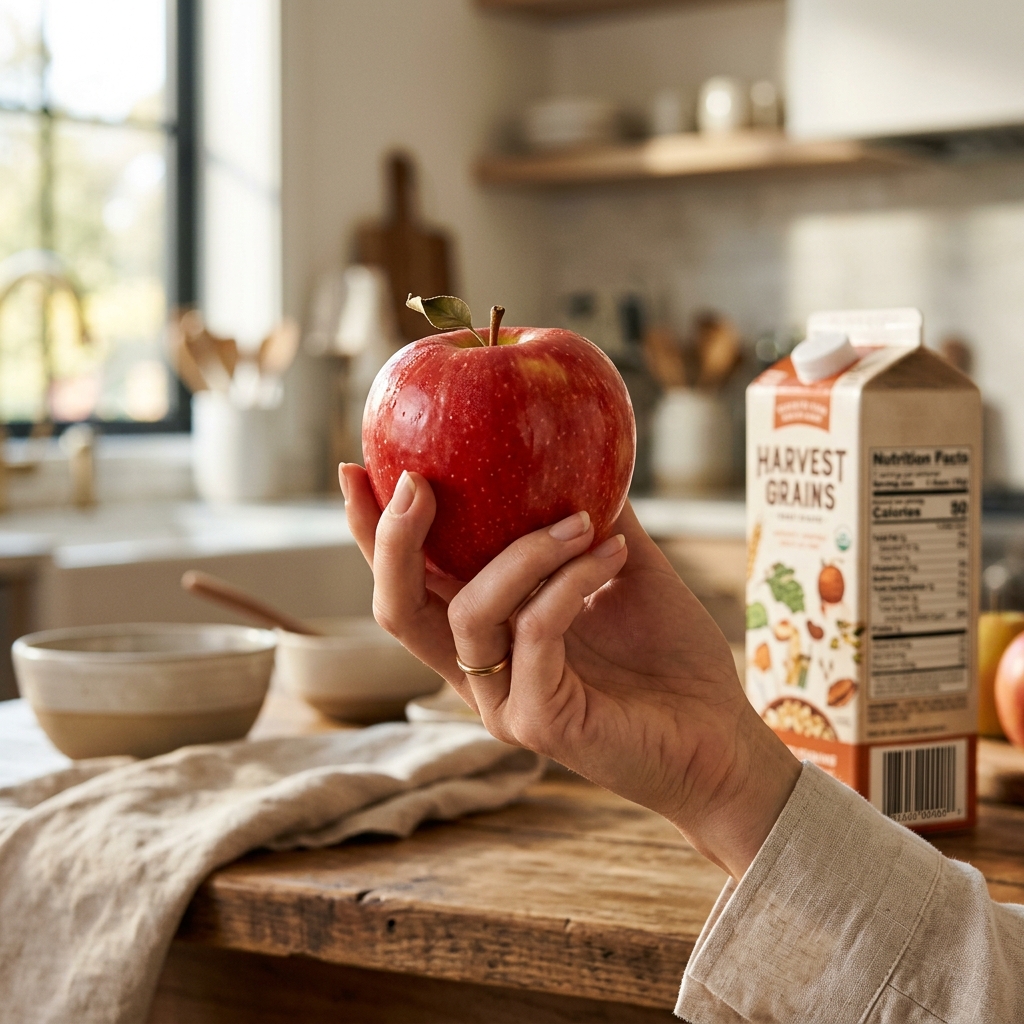
- An apple picked from a tree does not have a barcode.
- A fresh, wild-caught salmon fillet has no barcode.
- A bunch of organic spinach from the farmers' market has no barcode.
- A warm, home-cooked bowl of dal and brown rice has no barcode.
When you eat clean, whole foods, the barcode scanner becomes completely useless. You are immediately thrown back into the dark ages of typing, searching, and guessing.
3. The Dangerous Psychology of "Ease of Tracking"
Because barcode tracking is so easy and logging whole foods is so tedious, dieters often succumb to a dangerous subconscious habit: **they eat more processed food because it is easier to log.**
Dieters will choose a highly processed protein bar over a handful of fresh almonds and a hard-boiled egg simply because they can scan the wrapper and finish their logging chore in one second.
This is the ultimate paradox of legacy calorie apps—they are designed in a way that actively discourages the consumption of whole, raw, single-ingredient foods.
4. The Visual Alternative: Picture-First Scanning
To build a truly healthy tracking routine, we need a technology that treats fresh, whole foods with the same simplicity as a bag of chips.
That is exactly why **Nutraize** is built on picture-first visual recognition.
Instead of scanning a UPC barcode, you snap a photo of the food itself. Our visual AI instantly identifies raw vegetables, roasted nuts, fresh meats, and homemade plates just as easily as legacy apps scan a plastic box. We bring the speed and convenience of barcode scanning to the organic world of real, natural foods.
Track Real Food Instantly
Nutraize handles both barcodes and real whole foods through visual scanning. Stop letting outdated, processed-biased scanners dictate what you eat.
